


Too often, cable managers are treated as the cosmetic “last step” of a rack build. That view is costly.
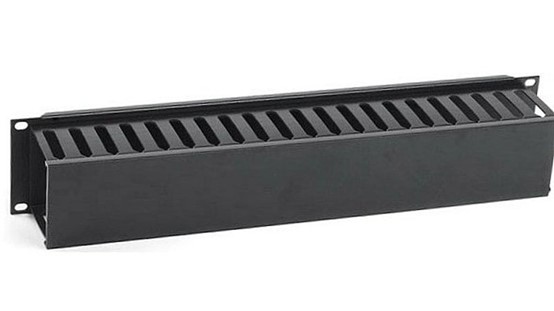
Too often, cable managers are treated as the cosmetic “last step” of a rack build. That view is costly. Cable management is a design decision that affects signal performance, thermal stability, serviceability, and the long-term cost of running your network. You either budget for it up front—or you pay for it later in troubleshooting hours and avoidable downtime.
First, performance and reliability. Copper pairs and fiber strands are engineered around bend radius, twist integrity, and controlled strain. When patch leads are forced into sharp turns or hang from ports without support, you introduce return loss, crosstalk, and intermittent faults that are notoriously hard to diagnose. Proper horizontal managers with radius lips, rear lacing bars, and vertical channels transfer mechanical load to the rack and keep geometry intact—protecting every termination you’ve paid to install.
Second, airflow and thermal discipline. Cabling sprawl is the enemy of front-to-back airflow. If intakes and exhaust paths are obstructed, switches run hotter, fans run harder, and component life shortens. Covered horizontal managers, brush panels, and consistent routing lanes maintain clear air paths. The result is quieter, cooler racks and fewer thermally induced failures.
Third, serviceability and mean time to repair. In high-change environments, the most expensive minutes are the ones spent tracing unknown paths. Documented entry/exit patterns (e.g., left vertical for ports 1–24, right vertical for 25–48), pathway labels, and hook-and-loop bundling reduce MAC and break-fix time dramatically. Technicians follow a predictable map instead of fishing through a spaghetti bowl, which also reduces the risk of accidental disconnects.
Fourth, density and scalability. Modern top-of-rack designs push port counts to the limit. Without disciplined management, latch access disappears at 70–80% utilization. Deeper, dual-sided vertical managers and finger-duct horizontals preserve latch clearance so you can actually use the density you’ve purchased. Always size pathways for growth—30–50% spare capacity on day one is cheaper than retrofitting a live rack.
Fifth, compliance and customer perception. Standards call for separation of power and data, respect for bend radius, and proper support. Good management makes these practices repeatable and auditable. It also communicates engineering rigor to auditors, partners, and end customers; a clean rack is a visible proof point that processes are under control.
Common objections fall apart under scrutiny.
“We’ll tidy it later” seldom happens—once a rack is live, retrofits risk outages and require change windows you rarely get. “Zip ties are enough” ignores deformation and jacket damage from over-tightening, and it makes routine MACs painful. “Covers cost more” overlooks the labor and downtime saved by preventing cords from drifting out of channels.
Practical selection guidance: choose horizontal managers with smooth radius exits; vertical managers with sufficient depth and finger spacing; tool-less covers for fast access; brush pass-throughs where airflow matters; rear lacing bars behind dense switches; and hook-and-loop for serviceable bundles. Establish a left/right routing policy, label pathways (not just cords), and define slack zones away from equipment faces.
cable management is not decoration—it is infrastructure. Specify it early, size it for growth, and document the patterns. You will gain measurable improvements in performance, uptime, and technician productivity.
If you’re planning a refresh and want a concise bill of materials that pairs managers with patch panels, keystone modules, and fiber cassettes, feel free to connect.


